REHABOT: A smart AI assistant for geriatric rehabilitation at home
Project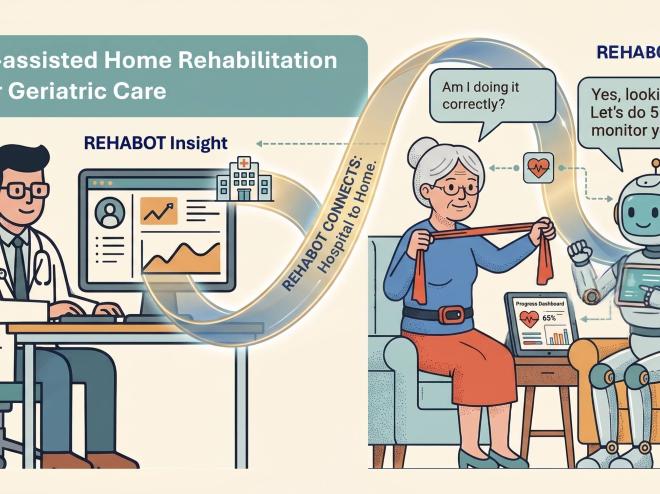
An increasing number of older people are recovering at home following a stay in a geriatric rehabilitation centre. The REHABOT project is developing a smart AI assistant that supports older people during their recovery at home and helps healthcare professionals gain a better understanding of the recovery process.
Reason
Due to the ageing population, pressure on the healthcare system is rising rapidly. At the same time, older people are spending increasingly shorter periods in care facilities following a hospital or rehabilitation stay, meaning that a large proportion of their rehabilitation takes place at home.
Digital rehabilitation platforms and sensor technology make it possible to support patients at home and monitor their progress remotely. However, these systems also present challenges. Healthcare professionals often lack context regarding patients’ home situations, making it difficult to interpret sensor data. Digital feedback also frequently lacks the personal nuance of face-to-face support.
This creates a need for technology that not only collects data, but also helps to better understand it and to support patients in a way that is both clear and motivating.
Goal
REHABOT is developing an AI-supported rehabilitation system that helps older people recover at home and supports healthcare professionals with remote monitoring and guidance.
The project is investigating how artificial intelligence can contribute to more personalised, understandable and context-aware support during the rehabilitation process.
Approach
The project comprises two components:
REHABOT Home
An AI-powered voice assistant that supports older people at home during exercises and engages them in conversations about their experiences, daily activities and recovery process.
REHABOT Insight
An AI platform for healthcare professionals that helps interpret sensor data, track progress and adapt treatment interventions.
The system combines wearable sensors, AI analysis and interactive feedback. A human-centred design approach is central to this: older people, healthcare professionals, designers, AI researchers and IT specialists are working together to develop the system.
Through focus groups, co-design sessions and practical trials, we are investigating how REHABOT can best meet the needs of users and fit into the daily practice of geriatric rehabilitation.
Expected outcomes
The project delivers:
- An AI-powered home rehabilitation assistant for older people.
- A digital platform for monitoring and support by healthcare professionals.
- New insights into human-centred AI applications in healthcare.
- Enhanced support for home rehabilitation and greater opportunities for personalised remote support.
In addition, REHABOT helps to reduce the pressure on geriatric care and supports independent recovery at home.

Project lead
Dr. Bin Yu – Digital Life research group, AUAS
Team
AUAS
- Prof. dr. Somaya Ben Allouch
- Dr. Bin Yu
- Dr. Michel Oey
- Dr. Daniël Bossen
- Dr. Margriet Pol
University Utrecht
- Dr. Shihan Wang
Inholland University of Applied Sciences & Omring
- Dr. Marije Holstege
Partners
- Utrecht University
- Inholland University of Applied Sciences
- Omring
- De Zorgcirkel
- Argos Zorggroep
- Hipper Therapeutics B.V.
- PAM B.V.
Funding
RAAK-publiek